REVIEW · VERNAZZA
Cinque Terre: Pesto Making Class with Wine and Food Tasting
Book on GetYourGuide →Operated by CINQUE SENSI PESTO CLASS · Bookable on GetYourGuide
Pesto made by hand beats jarred sauce, every time. This Cinque Terre class is a hands-on pesto-making session in a real stone cellar, then you eat it with local food and wine tastings that fit the rhythm of the coast. I like that you work with a mortar and pestle instead of watching someone else do the work, and I also like how close it is to Vernazza train access—no long logistics puzzle.
One thing to plan around: the experience is not suitable for gluten intolerance, since the tastings include items like focaccia and bread (and gnocchi in the full meal sessions).
In This Review
- Key highlights you’ll actually care about
- A pesto class that feels like part of Cinque Terre life
- Getting there from Vernazza station in minutes
- What the cellar lesson is really about (not just tasting)
- The full meal sessions at 12:30 and 5:30
- First tasting: cheese, focaccia, EVO oils, and wine
- Basil prep while you enjoy the second wine
- Pesto making in the mortar, then tasting it the authentic way
- Liqueur and chocolate to close
- The lighter 3:00 p.m. snack session
- The practical skills you’ll take home and use
- Basil handling, so it tastes bright instead of dull
- Crushing and combining in a mortar
- Building balanced pesto by taste
- Wine and food pairings: how they fit the lesson
- Instructor vibe, group size, and pacing
- Price and value: what $77 buys you in real terms
- Who should book this pesto class (and who shouldn’t)
- Should you book? My honest take
- FAQ
- How long is the pesto class?
- Where do I meet the class in Vernazza?
- Are there different time options?
- What food and drinks are included?
- Is it suitable for gluten intolerance?
- What’s the group size and language?
Key highlights you’ll actually care about
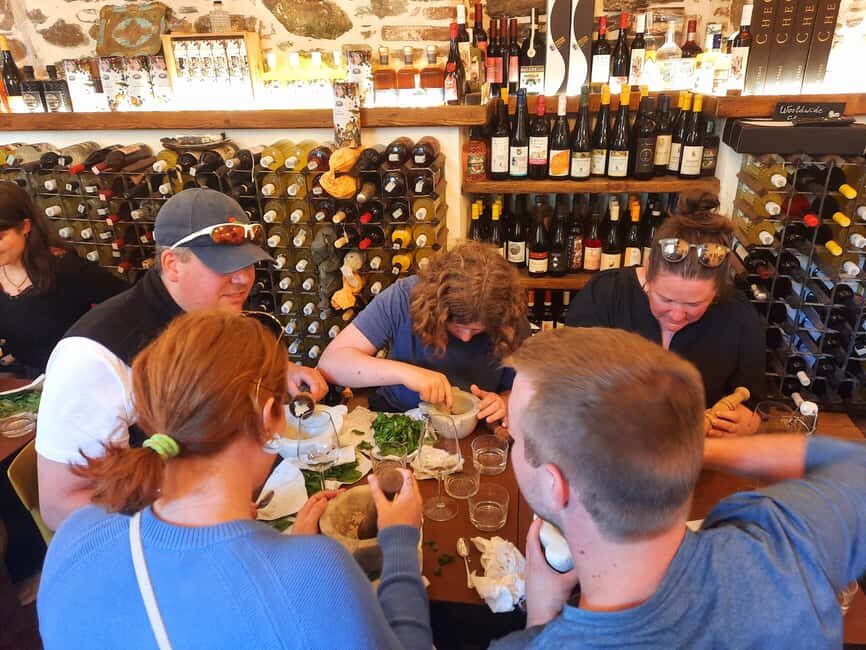
- Handmade Ligurian pesto techniques using a mortar and pestle, step-by-step
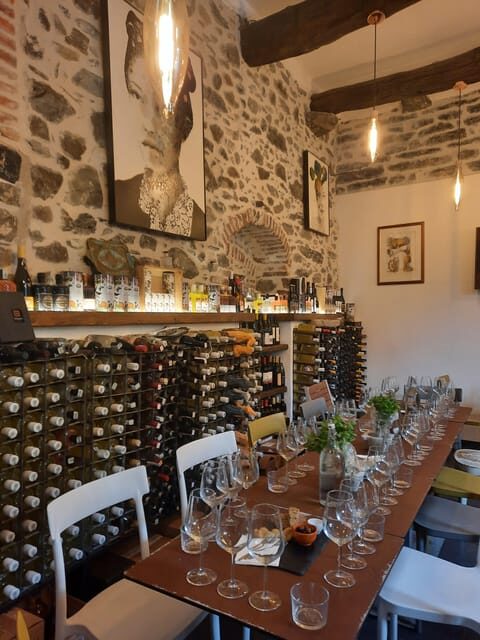
- Cellar setting near Vernazza station, with ancient stones and wooden beams
- Wine, EVO oil, and cheese tastings built into the lesson, not tacked on at the end
- Two session formats: a full meal (12:30 or 5:30) or a lighter snack (3:00)
- Small group size (up to 8), which keeps the pace friendly
- You leave with home-ready skills, including basil-handling tips and crushing methods
A pesto class that feels like part of Cinque Terre life
If you’ve ever tried to make pesto at home and wondered why it tastes flat, this is the fix. Ligurian pesto is simple on paper—basil, oil, garlic, nuts, cheese—but the texture and balance come from technique. Here, you do the technique yourself, by hand, in a way that makes it obvious why Italian cooks swear by the mortar.
The setting helps too. Your class happens in a characteristic Cinque Terre cellar, with the kind of stone walls and wooden beams that make the whole thing feel rooted in place. Instead of a generic cooking studio vibe, you get the feeling you’re learning local food habits in the same environment where people store and share it.
If you're still narrowing it down, here are other tours in Vernazza we've reviewed.

Getting there from Vernazza station in minutes
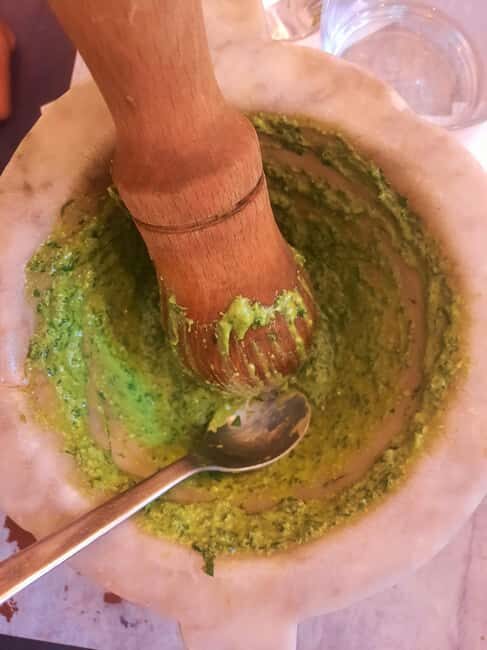
The meeting point is right where you want it: from Vernazza train station, hike up about 20 meters and look left for the stone building. This is one of those details that matters more than it sounds. If you’re moving between towns by train, you don’t want a lesson that turns into an extra mini-hike before you even start.
The class time options also help you slot it into the day. If you’re using Vernazza as a base, the timing makes sense for either a food break before dinner or a planned meal moment. And since the class runs about 1.5 hours with a small group (limited to 8 participants), it’s not a half-day commitment.
If you’re wondering about comfort logistics: the experience lists comfortable shoes because you’ll walk up a short distance to the cellar. Also, because it’s a hands-on food class, you should expect to stand and move around during prep.
What the cellar lesson is really about (not just tasting)
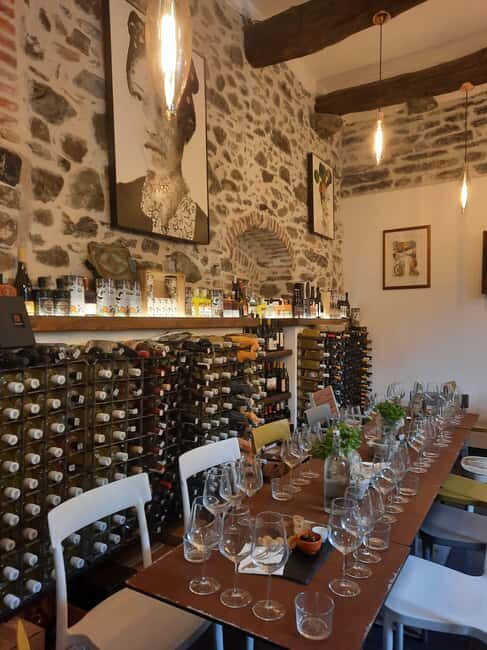
This isn’t only a food sampling stop. You’re learning how to make pesto the Ligurian way, with attention to the steps that most people skip.
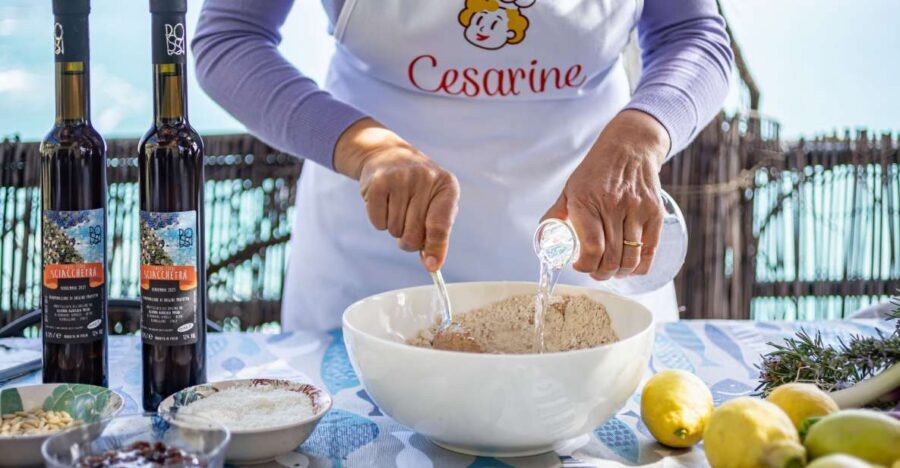
You’ll prepare authentic Ligurian pesto by hand using a traditional mortar and pestle. The ingredients are selected to be top quality, and the class focuses on how to treat basil leaves and how to crush and combine everything so it turns into a sauce you’d recognize in Italy—not a crushed salad dressed with oil.
There’s also a clear teaching style behind it. Many participants highlight that the instructor explains each step and the reason behind it. That’s the difference between doing a recipe and learning a method. You should walk away knowing what to adjust at home if your pesto tastes too sharp, too thick, or too oily.
And yes, you get to taste along the way, with food and drink that make each step meaningful.
The full meal sessions at 12:30 and 5:30
There are two full meal times: 12:30 p.m. and 5:30 p.m. In these sessions, you get the most complete flow: multiple tastings, then you make pesto, then you eat it properly with a final sweet finish.
First tasting: cheese, focaccia, EVO oils, and wine
You start with a wine served alongside local cheeses, focaccia, and selected EVO oils. This is useful even if you’re not a wine expert. You’re training your palate to notice flavors that matter later—freshness, saltiness, oil character, and how wine acidity works with food.
Basil prep while you enjoy the second wine
Next, you move into basil prep. This is where the class becomes practical. You learn how to handle the fresh basil leaves before crushing—because basil isn’t just an ingredient; it’s the base flavor that can go wrong if you treat it like a throw-in garnish.
While you do this, you’ll enjoy a second wine, keeping the pace relaxed and turning the prep time into part of the tasting experience.
Pesto making in the mortar, then tasting it the authentic way
Then comes the core moment: you make pesto using the mortar and pestle. The payoff is that you taste the pesto mixed with fresh gnocchi. The gnocchi portion is served directly from the mortar, so the sauce feels integrated rather than spooned on top.
This part is also why the technique matters. When you crush and combine by hand, the pesto develops texture differently than most quick blends. It tastes smoother and more cohesive. If you’re the type who likes to cook but hates “mystery sauce,” you’ll appreciate that the instructor explains what’s happening and why.
Liqueur and chocolate to close
To finish, you get a liqueur and chocolate pairing. It’s a sweet landing that makes the class feel like a full culinary moment rather than a snack with a lesson attached.
The lighter 3:00 p.m. snack session
If you don’t want a full meal, there’s a 3:00 p.m. option described as a lighter tasting. You still learn the traditional pesto-making techniques, just in a smaller food format that fits afternoon timing.
You’ll pair pesto-making with a wine tasting and accompaniment: cheese, EVO oils, focaccia, and bread. That means you still get the key ingredient lessons and the flavor pairing elements, but without the gnocchi-plus-late-course feel of the full meal sessions.
If your plan is to eat dinner later and you want something active but not heavy, this time slot is often the smarter pick.
The practical skills you’ll take home and use
The best part of a cooking class isn’t the meal—it’s the mental checklist you form. This one teaches pesto as a set of technique choices.
Basil handling, so it tastes bright instead of dull
Fresh basil can go bitter or fade fast if handled badly. The class focuses on how to handle basil leaves before crushing. That’s a skill you’ll notice when you try pesto at home: your basil flavor will stay more vivid and less tired.
Crushing and combining in a mortar
A mortar and pestle changes everything. It forces you to pay attention to texture—how the garlic breaks down, how nuts blend, and how cheese and oil bind. You get instructions that help you understand the process, not just follow a workflow.
Building balanced pesto by taste
As you make pesto in the cellar, you’re also tasting the related foods and oils. That matters because pesto isn’t one flavor. You’re building balance: basil brightness, garlic bite, nut richness, cheese salt, and oil smoothness.
And since the class teaches how to recreate real pesto at home, you’re not left guessing which ingredient ratio was the secret.
Wine and food pairings: how they fit the lesson
This is a food-and-wine class with enough structure that you can track why each pairing happens.
You’ll taste local wine alongside cheeses and focaccia at the start of the full sessions. Then you taste again while you prep basil. Finally, wine continues through the experience, and you end with a liqueur-and-chocolate pairing.
That matters for your learning because wine acidity and flavor intensity are like a training tool. If the cheese is salty, the wine’s acidity and fruit can keep the plate from tasting flat. If the EVO oil is sharp or peppery, the wine can either sharpen the basil notes or soften the edge. When you eat pesto with gnocchi, you’ll understand how pesto behaves when it’s mixed into something starchy, not just spread on bread.
Also, the instructors provide selected wines from the area. You don’t just get a random red pour; the pairings are part of the local food story.
Instructor vibe, group size, and pacing
Small group matters here. With a maximum of 8 participants, you’re more likely to get attention and a pace that fits beginners and experienced cooks alike. Reviews frequently highlight that the instruction is clear and that the pacing lets everyone enjoy the process and the tastings.
You might meet an instructor named Carol—or on other days, Pedro. Either way, the teaching style seems consistent: step-by-step guidance, encouragement, and tips that help you repeat the method at home.
One practical note from the way sessions are commonly run: people sometimes sit at separate tables rather than one big shared setup. If you’re hoping for lots of casual conversation with new people, you may or may not get that kind of interaction. Still, the experience is friendly and relaxed, and the hands-on format keeps you engaged.
Price and value: what $77 buys you in real terms
At $77 per person for a 1.5-hour class, it’s not a budget “snack lesson.” But it can be good value because you’re not just paying for instructions—you’re paying for ingredients, wine tastings, and a full food flow.
In the full meal sessions (12:30 or 5:30), you get:
- A wine tasting sequence
- Local cheeses, focaccia, and selected EVO oils
- Pesto made in a mortar
- Gnocchi with pesto (included in those full sessions)
- A liqueur and chocolate finish
- Water
For the 3:00 snack session, you still get the wine tasting and the main food elements (cheese, EVO oils, focaccia, bread), just without the gnocchi and full closing setup described for the full meal format.
So the real question isn’t just the price. It’s whether you want:
- a hands-on method lesson, and
- a structured food-and-wine tasting, and
- a meal you can partly count as lunch or an early dinner.
If that sounds like your kind of travel day, the cost starts to look fair.
Who should book this pesto class (and who shouldn’t)
You’ll probably love this if you:
- want a tactile cooking experience (mortar and pestle, not a demo)
- enjoy wine pairings with local food
- like short, high-impact activities that fit around train travel
- want pesto skills you can repeat at home
You might skip it if:
- you have gluten intolerance (the class is not suitable)
- you’re avoiding alcohol, since wine tasting is included
- you prefer restaurant meals over active cooking and technique learning
One more fit detail: it’s wheelchair accessible, so it can work for mobility needs as long as you’re comfortable with the short walk from the station area to the meeting building.
Should you book? My honest take
If you’re in Vernazza and you want more than a quick food stop, I think this is an easy yes. The pesto-making part is the real driver: you learn technique by doing it, and then you eat your work immediately with local pairings in a classic Cinque Terre cellar.
The value is strongest for the full meal sessions at 12:30 or 5:30, because you get the complete arc: cheese and focaccia with oils and wine, basil prep, mortar-made pesto with gnocchi, and a sweet liqueur-and-chocolate finish. If you only have an afternoon gap, the 3:00 snack session still keeps the core learning, just with lighter food.
The only hard stop is the gluten intolerance note. If that applies to you, don’t gamble—pick a different Cinque Terre food experience.
FAQ
How long is the pesto class?
The experience runs for about 1.5 hours.
Where do I meet the class in Vernazza?
Meet at Vernazza train station, hike up about 20 meters, then look left for the stone building.
Are there different time options?
Yes. There are full meal sessions at 12:30 p.m. and 5:30 p.m., and a lighter snack session at 3:00 p.m.
What food and drinks are included?
It includes a Cinque Terre wine tasting plus food such as focaccia, cheese, EVO oils, pesto, and water. Gnocchi is included only in the full meal sessions, and liqueur and chocolate are included only in the lunch/full meal experience.
Is it suitable for gluten intolerance?
No, it’s listed as not suitable for people with gluten intolerance.
What’s the group size and language?
It’s a small group limited to 8 participants, and the instructor speaks English.